
Why it happens
Thin gums
Some people naturally have thinner, more fragile gum tissue.
Brushing too hard
Hard bristles or heavy pressure wear the gum away.
Gum disease
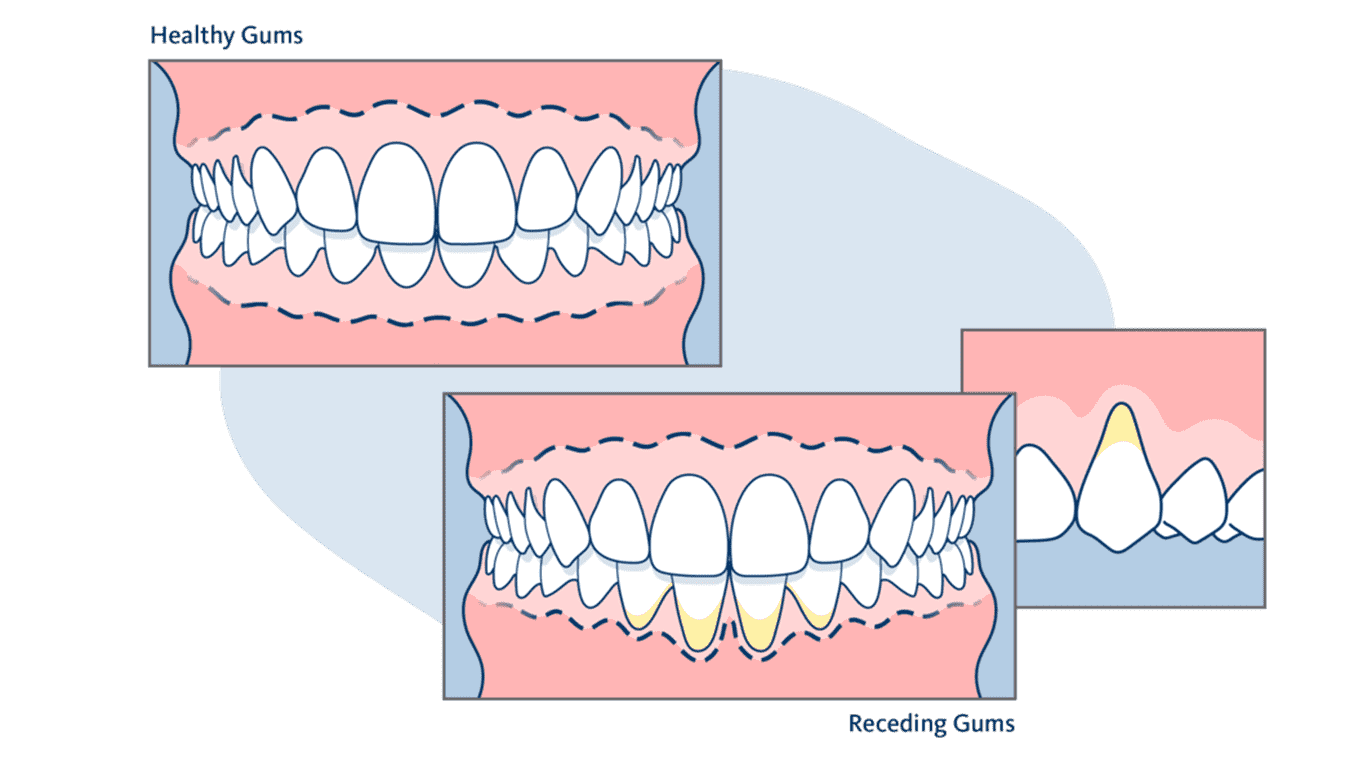
Loss of supporting bone lets the gum drop.
Tooth position
Teeth outside the bone, sometimes after orthodontics, or a tight frenum.
Treatment options
- 01
Stop it getting worse
Correcting brushing technique, treating any gum disease and managing sensitivity. Stable, mild recession is often simply monitored.
- 02
Gum grafting
Where recession is progressing, causing sensitivity or affecting appearance, a graft can cover the root or thicken the gum. Tissue is usually taken from the palate; in some cases a collagen substitute can be used instead. More about gum grafting
- 03
Before orthodontics
If your orthodontist is concerned about thin gums, grafting before or during treatment can reduce the risk of recession.
Common questions
How long is recovery after a graft?
Most people are back to normal activities within a day or two. The palate and graft site are tender for one to two weeks, and you'll have a soft diet and specific cleaning instructions.
Will the root be fully covered?
It depends on the type of recession and the bone between the teeth. We'll explain what result is realistic for your case before you decide.
Should I switch to a soft toothbrush?
Yes — a soft or extra-soft brush with gentle pressure is a good start. We'll show you the technique at your visit.