
Gingivitis and periodontitis
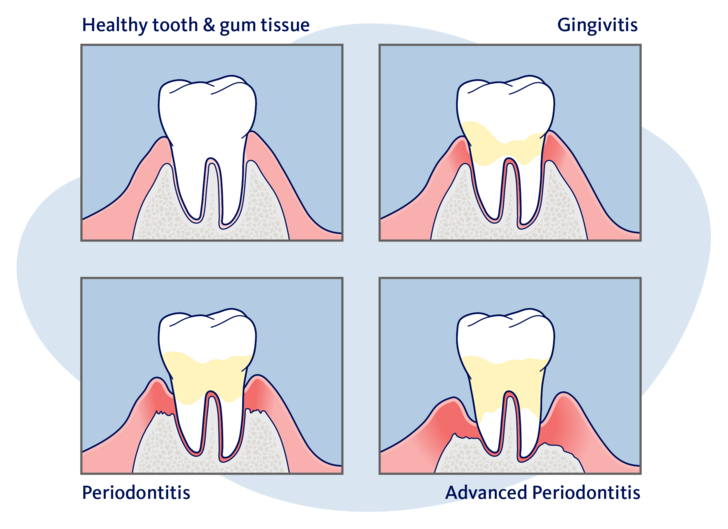
Gum disease starts with bacterial plaque along the gumline. In gingivitis, only the gums are inflamed and the condition is reversible with good cleaning.
In periodontitis, the inflammation extends deeper and the attachment and bone supporting the teeth are gradually lost. That damage doesn't grow back by itself, but the disease can be brought under control and, in some cases, lost support can be partly rebuilt.
Who is more at risk
Smoking or vaping
Increases risk and can mask bleeding.
Diabetes
Especially when blood sugar is not well controlled.
Family history
Some people are more susceptible.
Hard-to-clean areas
Crowding, old restorations, gaps.
Gum disease and your general health
Periodontitis is associated with several general health conditions, most clearly diabetes, where the relationship appears to work in both directions. If you have diabetes or heart disease, let us know at your assessment so we can plan with your doctor where needed.
How we treat it
- 01
Assessment & diagnosis
We measure the gum attachment around every tooth, check bleeding, recession and mobility, and take X-rays where needed. Your condition is staged and graded so you know exactly where you stand.
- 02
Home care & risk factors
A cleaning routine fitted to your mouth, and support with risk factors such as smoking and diabetes control.
- 03
Deep cleaning
Root surface debridement under local anaesthetic removes deposits from below the gumline. We then review how the gums have responded.
- 04
Surgery, if needed
Sites that don't respond may need regenerative surgery, which aims to rebuild lost bone and attachment. About periodontal surgery
- 05
Long-term maintenance
Regular supportive care, usually every few months, shared with your own dentist. This is what keeps results stable.
Common questions
Does treatment hurt?
Deep cleaning is done with local anaesthetic, so most people feel pressure rather than pain. Gums can be tender for a few days afterwards.
Can gum disease be cured?
Periodontitis can be controlled and kept stable for the long term. Because it can return, ongoing maintenance is part of treatment.
Will I lose my teeth?
Most teeth can be kept when gum disease is treated and maintained. Your assessment will tell you which teeth are at risk and what can be done.
Do I need a referral?
No. You can book directly. If your dentist has referred you, bring the letter and any recent X-rays.