
Is an implant right for you?
Most adults with a missing tooth can be considered. Before an implant we make sure:
- Any gum disease is treated and stable — active gum disease is a major risk for implant problems later.
- There is enough bone, or a plan to rebuild it.
- General health factors such as smoking, diabetes and some medications are reviewed.
After a tooth is removed
Depending on the bone and gum at the site, there are three main pathways. We'll recommend the one that suits your situation.
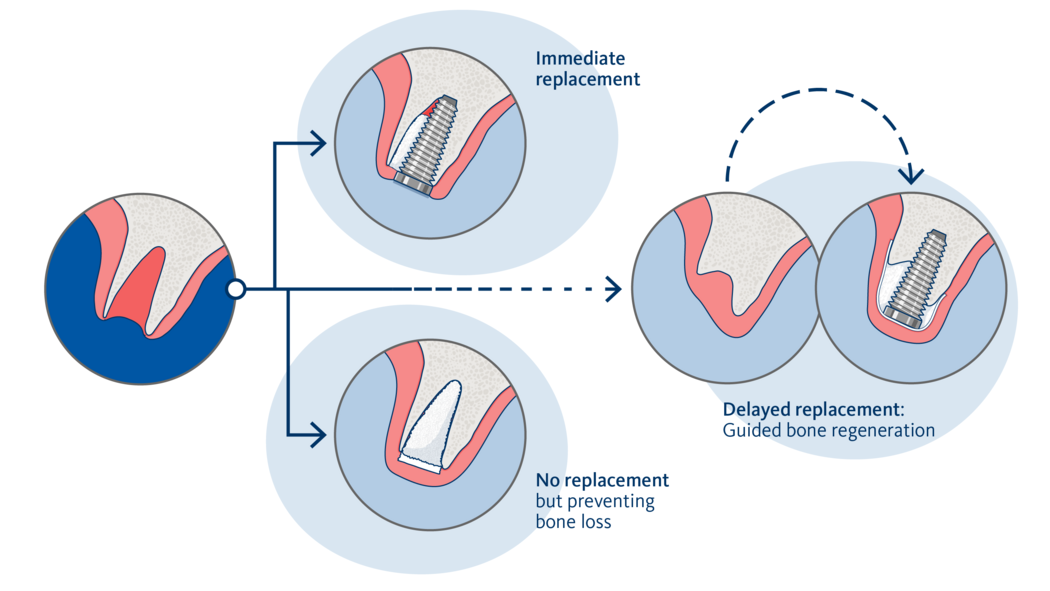
- Immediate replacement. The implant is placed on the same day the tooth is removed, where the bone allows.
- Delayed replacement. The site heals first, then the implant is placed with guided bone regeneration to rebuild missing bone.
- No replacement yet. The socket is grafted to preserve the bone, keeping future options open.
The steps
- 01
Consultation & 3D planning
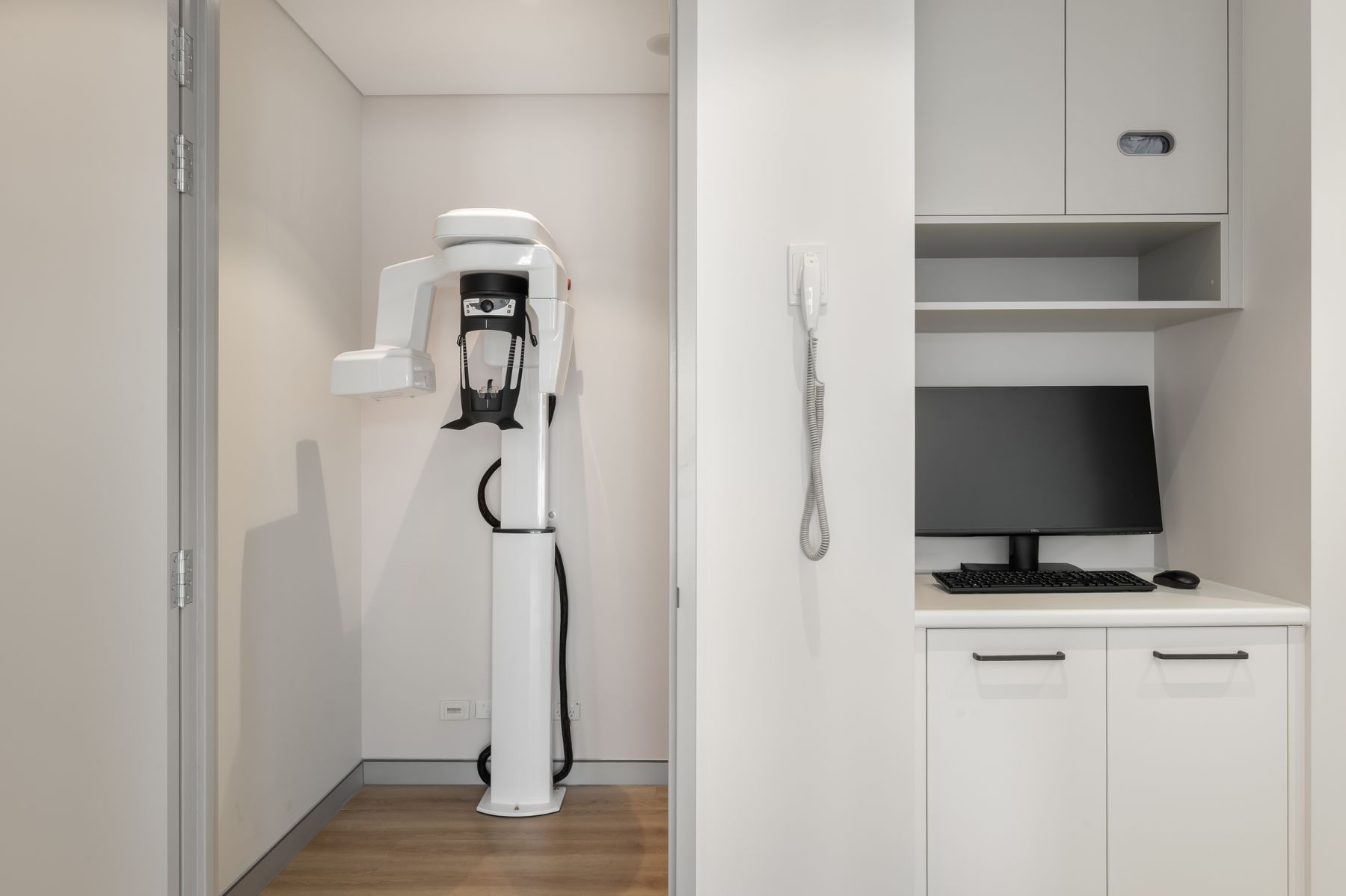
A gum and bite assessment, plus a 3D (CBCT) scan to measure the bone and locate nerves and sinuses. The implant position is planned around the final tooth.
- 02
Bone grafting, if needed
Where bone has been lost, it can be rebuilt with a graft — sometimes at the same time as the implant, sometimes beforehand. In the upper back jaw this may be a sinus lift.
- 03
Implant placement
Usually under local anaesthetic. We use Straumann implants, a well-documented system that dentists worldwide can service.
- 04
Healing
The bone bonds to the implant over a few months. Longer if grafting was needed.
- 05
The new tooth
Your dentist or a prosthodontist makes and fits the crown. We stay in touch with them throughout.
Looking after an implant
Implants don't decay, but the gum and bone around them can become inflamed, much like gum disease around teeth. Cleaning at home and regular reviews are what keep an implant healthy. Read about implant problems.
Fees
Implant fees depend on whether grafting is needed and what kind of tooth goes on top. After your consultation and scan you receive a written, itemised estimate with item numbers, so you can check your health fund rebate before deciding.
Common questions
How long does the whole process take?
Commonly three to six months from placement to the final tooth, and longer when bone grafting is done first. You'll get your own timeline at consultation.
What are the risks?
As with any surgery: swelling, bruising and infection, and less commonly nerve or sinus problems, or the implant not integrating. We go through the risks for your situation before you decide.
Will I have a gap while it heals?
Not usually for front teeth — a temporary tooth can be made. Options are discussed during planning.
Can my own dentist make the crown?
Yes. Many of our implant patients are referred by their dentist, who restores the implant once it has healed.